
Short Description
The black locust is a deciduous tree or shrub with a loose rounded crown. It can grow up to 30 meters tall.
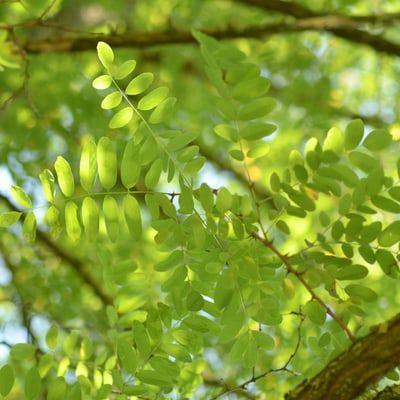
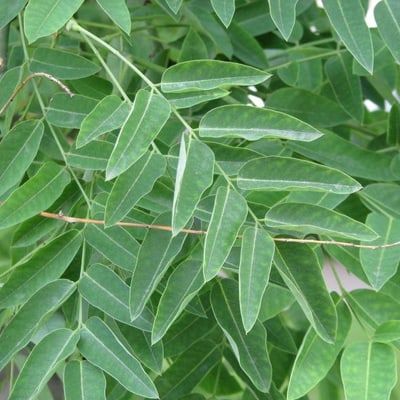
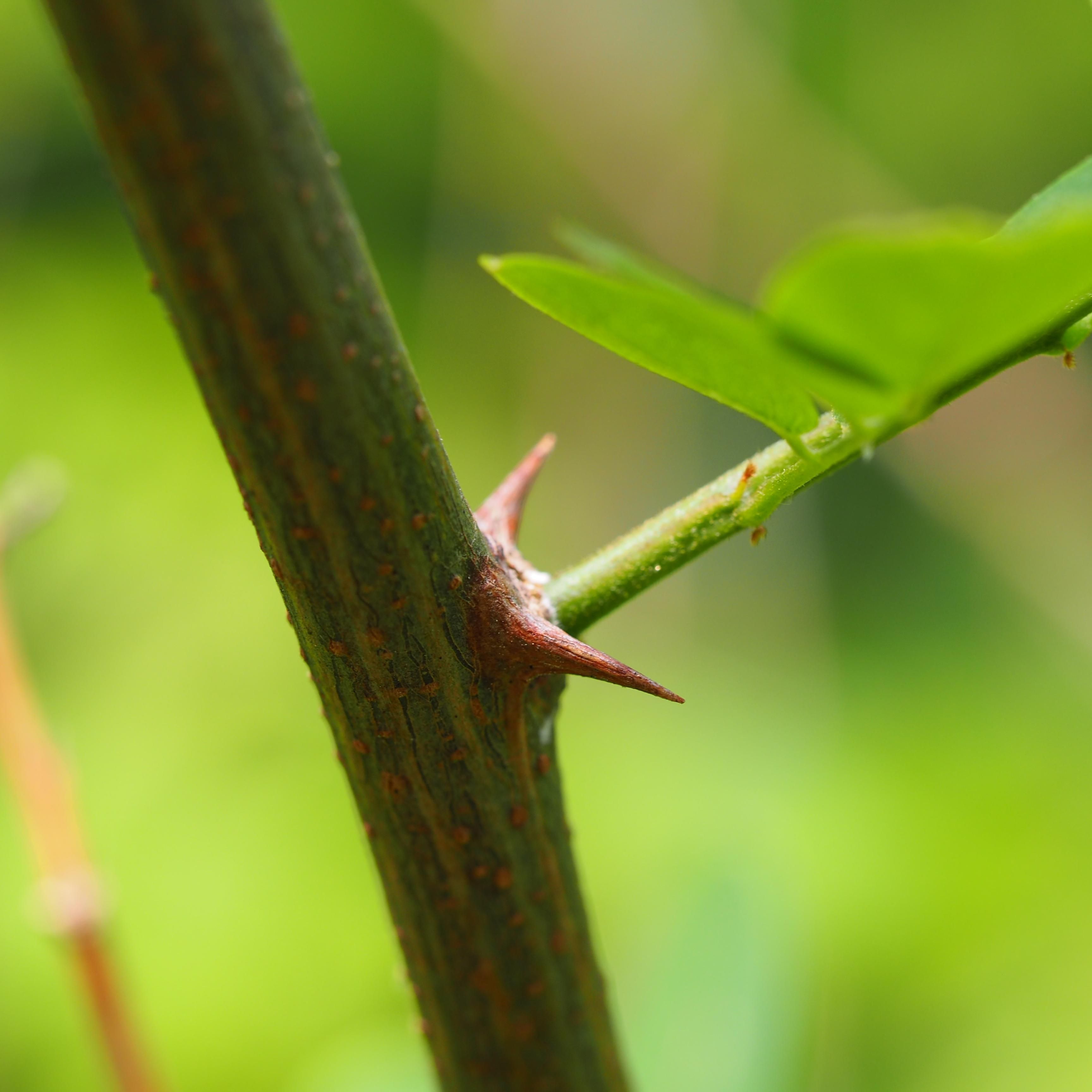
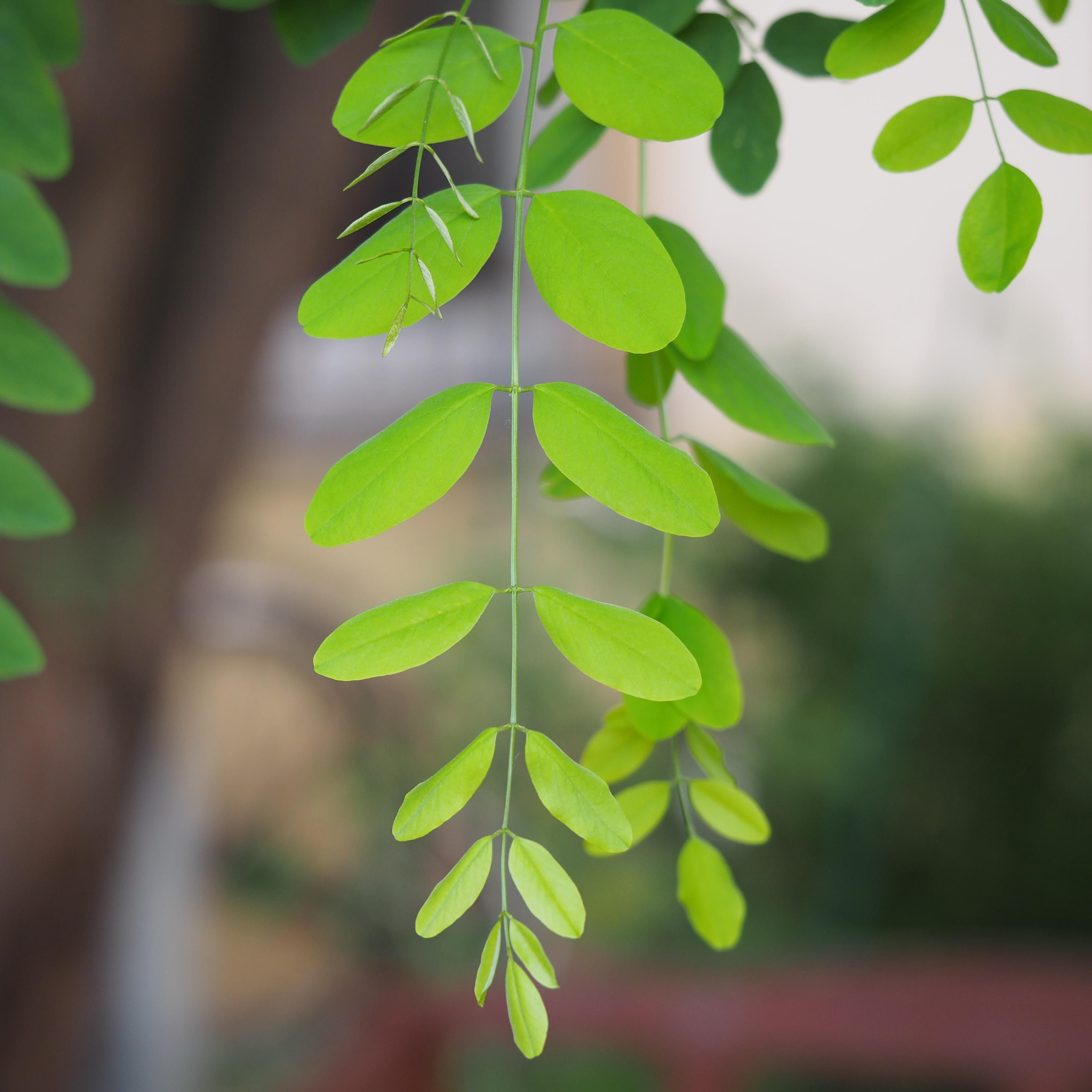
A leaf consists of 7-19 leaflets that finish with a single terminal leaflet (imparipinnate). The leaflets are oval with smooth margins. The two spines at the base of the leaf are a characteristic feature.
The bark is grey-brown with deep fissures.
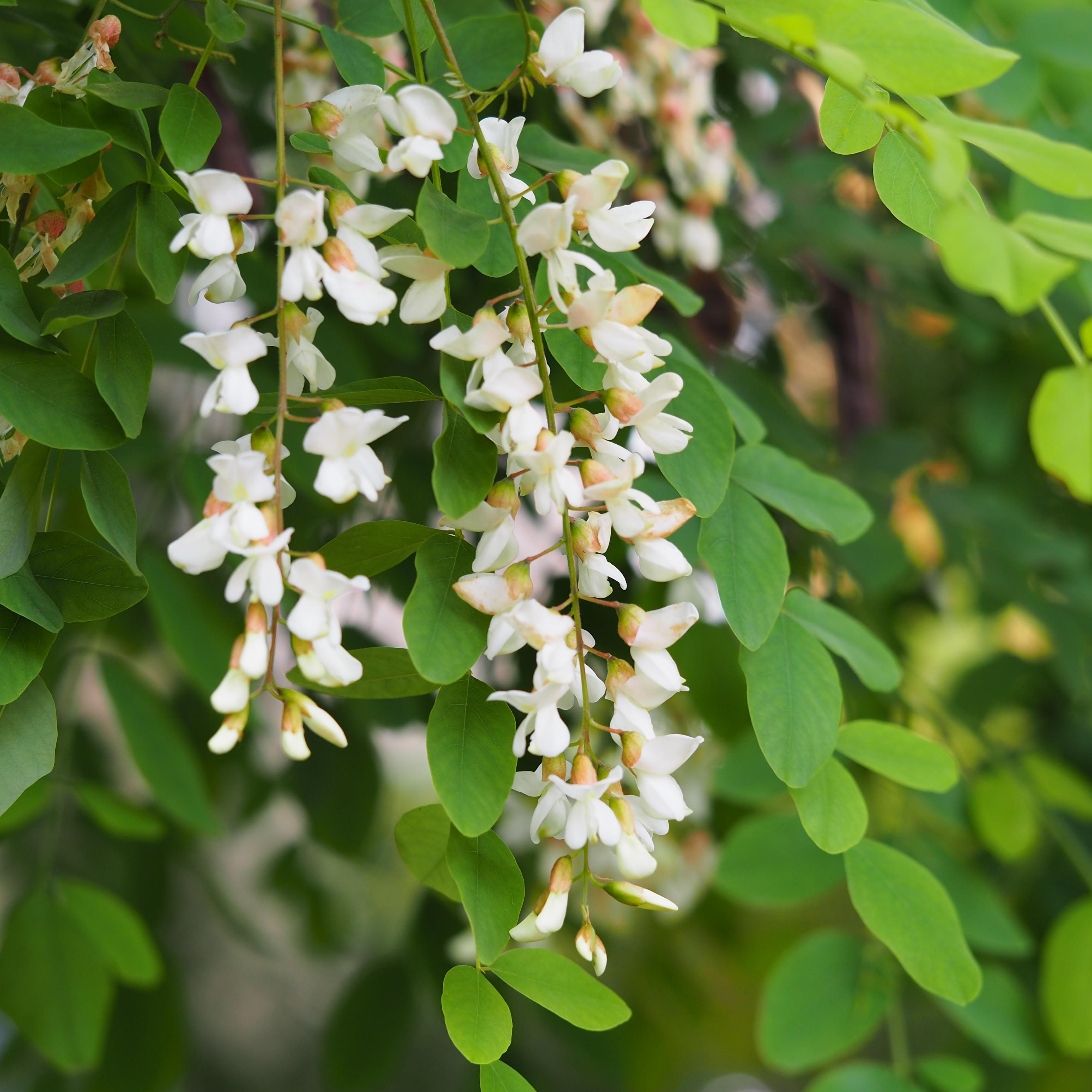
The flowers are white and appear in large clusters. They have an intense fragrance.
The fruits are long, flat, brown pods.
Features
Black locust
Robinia pseudoacacia
two spines at the base of the leaf
In the city
Black locust is often planted to prevent soil erosion and for harvesting the wood. However, it can frequently be found wild in open sites such as wastelands or along railway tracks. It prefers warm and sunny sites.
Fun Facts
Its flowers are used to flavour teas and syrups or eaten deep-fried in batter.
It is also called "False Acacia" because of its similar leaves and spines. A mix-up is almost impossible, however, as acacias only grow in a few places in Central Europe with a particularly mild climate.
The black locust is an invasive plant and often combatted in the interest of nature conservation. Scientists differ in their assessment of the level of this plant’s threat to the biodiversity of indigenous plants and the extent to which it should be combatted in urban settings.
It flowers from May to June.
The fruit ripening season is in September to October.
It can also reproduce through root suckers (vegetative reproduction).
- Endangerment level Germany: not evaluated
Black locust originates from North America. The species was introduced to Europe in the early 17th century and spread widely thanks to conditions favourable to its requirements. It is a non-native plant (neophyte).
The genus name "Robinia" refers to the court gardener at the French royal court Jean Robin.
The entire plant with the exception of the flowers is highly poisonous. The bark and fruits are particularly poisonous. Its pollen is allergenic. In spring, it is an important supplier of “acacia” honey.
Sources
Blütenstand, Alice Kracht, CC BY-SA 4.0, http://species-id.net/openmedia/File:Robinia_pseudoacia_%284%29.JPG
.JPG)
Dornen, Alice Kracht, CC BY-SA 4.0, https://offene-naturfuehrer.de/web/Datei:Robinia_pseudoacacia_(1).JPG
.JPG)
Blatt, Alice Kracht, CC BY-SA 4.0, https://offene-naturfuehrer.de/web/Datei:Robinia_pseudoacia_(1).JPG
.JPG)
Aas, G. & Riedmiller, A. (2002) Laubbäume. Bestimmen – Kennenlernen – Schützen, Bindlach: Gondrom Verlag.
Roth, L., Daunderer, M. & Kormann, K. (2008) Giftpflanzen - Pflanzengifte. Vorkommen, Wirkung, Therapie. Allergische und phototoxische Reaktionen, Hamburg: Nikol Verlag.
Page „Gewöhnliche Robinie“. : Wikipedia, The Free Encyclopedia. Date of last revision: 03.03.2016, 22:26 UTC. URL: https://de.wikipedia.org/w/index.php?title=Gew%C3%B6hnliche_Robinie&oldid=152153593 (Accessed: 27.04.2016).